

Geofencing in B2B: reach your target audience at trade shows and congresses
Geofencing in B2B: reach your target audience at trade shows and congresses
Date
July 16, 2026
At a trade show or congress, your entire target audience is briefly gathered in one place. With geofencing, you reach those people digitally too, and keep following up with them afterward. Used smartly, it's a powerful tool. Here's how to get the most out of it.
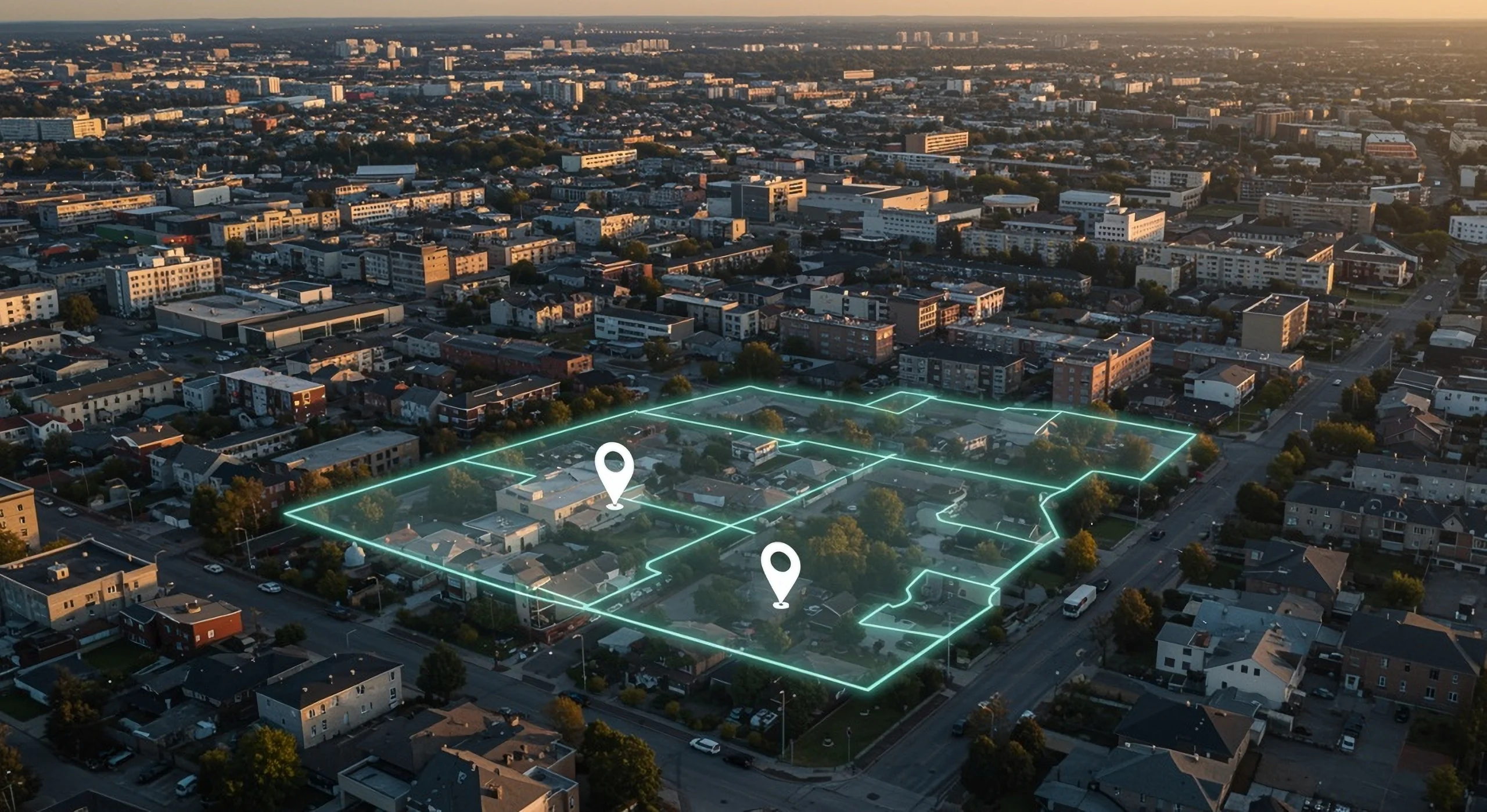
Geofencing means drawing a virtual boundary around a physical location, to reach people within that area on their phones in a targeted way. In B2B, that's especially valuable, because trade shows and congresses bring together exactly the audience you'd normally struggle to reach. An industry fair, a trade congress, a business event: all places where decision-makers and professionals gather in one location for days. And the great part is: contact doesn't stop once the event ends. These are the principles that make geofencing work.
Target audience density determines the return
The most important success factor is how your target audience relates to the rest of the attendees, and what you want to achieve. A geofence captures everyone in the area. If you want to reach a specific local or national audience that's only a small part of the visitors, it quickly gets expensive, because you're also paying for reach that falls outside your target. If, on the other hand, you're an international company that sees the entire congress crowd as a relevant audience, that broad reach becomes a strength instead of a cost. The trick is to match the deployment to who you are and who you want to reach.
ROI depends on the match with your target audience
Geofencing can be deployed at almost any event. The technology works everywhere. What differs is the return, and that's determined by the match between your target audience and the event's audience. If you want to reach a specific local or national group that makes up only a fraction of visitors at a large international congress, your reach is less efficient. If you're an international company with an international audience, that same congress is a perfect fit. And a national trade show with a high concentration of exactly your people can be ideal for a national audience. It's not the event that determines whether geofencing works, it's the match with your target audience that determines how much it delivers.
Choose your platform and programmatic solution deliberately
Where you buy your ads determines how targeted you can be. Many campaigns run by default through Google Display, the broad network that shows your ads across countless websites. Easy, but also blunt: you have little grip on exactly who you reach. We deliberately choose a programmatic platform, a system that buys ad space far more precisely based on data. That lets you steer more accurately on who sees your ad and where it appears. It's the difference between broadly scattering and targeted aiming.
Combine display with social for real impact
Geofencing only becomes powerful when you combine channels. Display delivers broad, local reach around the event. Social, particularly LinkedIn targeting by role or specialty, adds precision and reaches your audience very specifically on a personal level. Together they cover both breadth and depth. That mix is exactly what makes a campaign complete.
Keep following your audience with retargeting
This is perhaps where the greatest strength lies. Anyone you reach within the geofence can continue to be approached afterward. And that doesn't have to mean repeating the same banner. Right after the event is when you can offer something valuable: congress insights and highlights, a summary of what happened, or a targeted follow-up with a concrete offer. That way you build on that first contact and extend the impact from a few days of an event into an entire campaign period, with content that sticks.
Measure from the start and adjust
To be able to optimize and retarget, you need to measure properly from the start. Make sure your tracking pixels and measurement are in order before the campaign goes live. That way you know what's working as you go, can adjust course, and build a valuable foundation for follow-up campaigns. Measurement isn't the finishing touch, it's the foundation.
Consider context and the rules
Where you appear determines how your message lands. So steer toward the environments where you want to be visible. And in regulated sectors like healthcare, strict rules apply to who you may approach and how, so set up your campaign to stay within those rules. Good targeting there isn't just more efficient, it's also a matter of due care.
More stories





Frequently asked questions
Drawing a virtual boundary around a physical location to reach people within that area on their mobile devices in a targeted way. In B2B, it's used to reach target audiences at trade shows and congresses, and to keep following up with them afterward.
Because your target audience is concentrated in one place there. The higher the share of your target audience among attendees, the more efficient and valuable your reach.
By combining display with social channels like LinkedIn, choosing a strong programmatic solution, measuring properly, and building on the first contact with retargeting.
Retargeting extends the impact. Anyone you reach within the geofence can afterward be approached with something valuable: congress insights, a summary, or a targeted follow-up. That way, an event lasting a few days keeps working throughout an entire campaign period.

Contact us
We specialise in translating complex products into messages that truly land. We make the clinical human, the technical tangible, and the abstract recognisable.